

What Are Flame-Retardant Polymers?
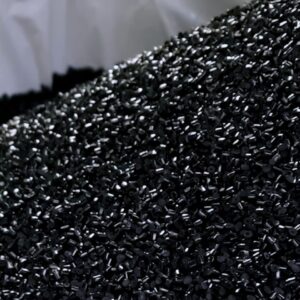
Flame-retardant polymers are plastics or elastomers made to resist ignition and slow flame spread, mainly by using FR additives. They are required in settings where safety regulations demand lower fire risk, such as insulation, battery housings, electronics, and automotive interiors.
Mechanisms of Flame Retardancy
Understanding how flame retardants work is the foundation for making sound material selection decisions. There are four primary mechanisms, and most commercial FR systems operate across more than one simultaneously.
Article Contents
1. Gas-Phase (Vapour-Phase) Inhibition
Combustion is a chain reaction in the gas phase. Halogenated FRs, especially brominated ones, decompose in fire to release gases that quench flame-sustaining radicals, breaking the combustion chain.
This method is efficient at low additive levels, which is why brominated FRs are common. The downside: generated gases can be toxic and smoky.
Antimony trioxide acts as a synergist, working with halogen compounds to form more effective radical scavengers. Using a synergist reduces the total FR loading needed.
2. Condensed-Phase Mechanisms
These mechanisms act at or within the polymer substrate rather than in the gas phase above it.
Mineral hydroxide fillers use endothermic decomposition. ATH decomposes at 180–200°C, releasing water vapour and forming aluminium oxide. MDH acts similarly at about 300°C. This process cools the polymer, dilutes gases, and avoids toxic byproducts or halogen chemistry.
Phosphorus-based FRs catalyse char formation, creating a dense layer that separates unburnt material from the flame. This layer slows heat transfer and limits fuel supply.
3. Intumescence
Intumescent systems — typically used in wire and cable, construction, and transport applications — produce a swollen, multicellular char when exposed to heat. A classic intumescent system contains three components working in concert:
- An acid source (e.g., ammonium polyphosphate, APP) which releases phosphoric acid on heating
- A carbonific (e.g., pentaerythritol), which forms the char matrix
- A blowing agent (e.g., melamine) which generates gases to expand the char
The foam-like char expands, creating a strong barrier to heat and oxygen. Intumescent systems are halogen-free and produce low-toxicity smoke, but entail precise ratios and are sensitive to moisture.
4. Physical Dilution and Thermal Sink
At high loadings, inert mineral fillers decrease combustible content and absorb heat. This requires 40–65 wt% filler content, which affects processing and mechanical properties. Having covered the core mechanisms, the guide next examines the main types of commercially available flame-retardant systems.
Types of Flame-Retardant Systems emerge from the science just discussed. The following sections discuss these system types and their industrial relevance.
|
Attribute |
Detail |
|
Mechanism |
Gas-phase radical quenching (often synergised with Sb₂O₃) |
|
Effective loading |
Typically 5–20 wt% (depending on base polymer) |
|
Performance |
Excellent — industry benchmark for UL 94 V-0 at low add-on levels |
|
Advantages |
Low loading, minimal mechanical property impact, well-understood performance, cost-effective on a $/unit-performance basis |
|
Limitations |
Regulatory pressure (RoHS, REACH SVHCs); dense, corrosive smoke; end-of-life environmental concerns; declining acceptance in EU/UK markets |
|
Typical use cases |
Connectors, PCB enclosures, wire insulation (legacy applications), industrial components |
|
Regulatory status |
PBBs and PBDEs restricted under RoHS since 2006. TBBPA under REACH assessment. Aromatic brominated FRs identified by ECHA as candidates for restriction (2023). Not a class-level ban — substance-by-substance review ongoing. |
Compounder’s note: Polymeric brominated FRs (e.g., brominated polystyrene, brominated epoxy oligomers) are generally more thermally stable and less likely to volatilise during processing than small-molecule brominated compounds. Where brominated systems are still permissible, the polymeric grades should be the default choice for high-temperature engineering polymers.
Phosphorus-Based Systems
|
Attribute |
Detail |
|
Mechanism |
Gas-phase radical inhibition AND condensed-phase char promotion — dual action |
|
Effective loading |
5–25 wt% depending on compound (red phosphorus most efficient; organophosphates higher) |
|
Advantages |
Halogen-free; good compatibility with many engineering plastics; lower smoke density than halogens; some grades offer UV stability |
|
Limitations |
Red phosphorus: colour constraint (red/black only), moisture sensitivity, risk of phosphine evolution if not stabilised; organophosphates: some under toxicity scrutiny; can hydrolyse in humid environments |
|
Typical use cases |
PA (nylon), PBT, PC, PC/ABS blends, EVA foams, textiles |
|
Regulatory status |
Regulators are moving toward restricticng organophosphates. ECHA has now put these chemicals on the SVHC list: https://chem.echa.europa.eu/100.003.739/obligations/candidateList/details |
Compounder’s note: Phosphorus efficiency increases dramatically in the presence of nitrogen — the phosphorus-nitrogen synergy is the chemical basis of most modern halogen-free FR systems for polyamides and polyurethanes. Exolit OP grades (Clariant) and Aflammit PE/PA grades are widely used in commercial applications. At 4 wt% phosphorus content, UL 94 V0 is achievable in partially aromatic polyamides with leading organophosphine oxide mixtures.
Regulagalters
Nitrogen-Based Systems
|
Attribute |
Detail |
|
Mechanism |
Condensed-phase char promotion; gas dilution via non-combustible N₂ and NH₃ release |
|
Effective loading |
10–30 wt% (melamine and its salts); lower in synergistic P/N combinations |
|
Advantages |
Low toxicity, halogen-free, good light stability |
|
Limitations |
Moderate efficiency alone; melamine sublimes near typical processing temperatures for high-performance engineering plastics; poor hydrolytic stability in some forms |
|
Typical use cases |
Polyurethane foams, flexible PVC replacement, polyolefins (as part of intumescent systems) |
Melamine cyanurate and melamine polyphosphate are the most commercially relevant grades. Melamine polyphosphate offers better thermal stability than melamine itself and is a workhorse in halogen-free PA66 systems.
Mineral Fillers — ATH and MDH
|
Attribute |
Detail |
|
Mechanism |
Endothermic decomposition; water vapour release; inert char formation |
|
Effective loading |
40–65 wt% for standalone FR performance |
|
Advantages |
Halogen-free; low smoke density; low toxicity; no corrosive combustion products; low cost per kg |
|
Limitations |
Very high loadings required; severe mechanical property reduction (impact, elongation, tensile); processing becomes extremely challenging above ~55 wt%; ATH limited to processing temps below ~200°C |
|
Typical use cases |
EVA/LDPE wire and cable jacketing, thermoplastic sheeting, roofing membranes, building boards |
|
ATH vs MDH choice |
ATH for processing below 200°C; MDH for engineering polymers requiring processing above 200°C |
Compounder’s note: ATH and MDH are the largest-volume FR additives globally — ATH alone accounts for approximately 38% of worldwide FR consumption. At the loadings required for standalone FR performance (50–65 wt%), twin-screw compounding requires aggressive screw design with high-torque feeders, careful venting to manage moisture, and surface-treated mineral grades (stearic acid or silane coupling agents) to achieve adequate dispersion and preserve interfacial bonding. Failure to use treated grades at high loading causes catastrophic loss of tensile elongation and notched impact strength.
Silicone-Based Systems
|
Attribute |
Detail |
|
Mechanism |
Condensed phase: forms a ceramic-like SiO₂ protective layer at flame surface; low fuel value |
|
Effective loading |
5–20 wt% (often used as a secondary synergist) |
|
Advantages |
Very low smoke; low toxicity; can improve melt flow; excellent high-temperature stability |
|
Limitations |
Cost; limited standalone FR efficiency; compatibility issues with polar polymers |
|
Typical use cases |
PC, PC/ABS, high-temperature engineering resins, cable compounds |
Silicone masterbatches (e.g., Dow Corning MB50 series) are increasingly used as complementary FR modifiers — they allow reduction of the primary FR loading while maintaining UL 94 V-0 and greatly enhancing surface finish and drip resistance.
Polymer Compatibility and Trade-Offs
Flame retardants interact with base polymers and additive systems. Knowing these relationships is fundamental for technical specification beyond datasheets.
Polyolefins (PE, PP)
Polyolefins are non-polar, have low surface energy, and process at relatively moderate temperatures. They offer particular challenges:
- Halogenated FRs are effective but must be tested for thermal stability at processing temperatures — degradation could lead to corrosive off-gassing and die plate fouling.
- ATH is the dominant choice for LLDPE and EVA cable compounds, but the loadings required (55–65 wt%) push the compound density above 1.5 g/cm³ and reduce elongation at break from >400% to <150%. This means cables become heavier and less flexible, affecting installation and performance in end-use environments.
- Intumescent P/N systems for polypropylene (APP + pentaerythritol ± silicone synergist) can achieve UL 94 V-0 at 25–35 wt% loading and preserve mechanical properties far better than mineral fillers, but are sensitive to moisture absorption in outdoor applications.
- PP is prone to thermal oxidative degradation during extrusion. FR additives can accelerate this, requiring production teams to re-optimise antioxidant packages whenever a new FR system is introduced to maintain product stability and prevent costly failures.
Engineering Plastics — ABS, PA, PC
These are the highest-value FR compounding targets and the most technically demanding.
ABS is intrinsically flammable (LOI ~18%) and prone to dripping. Most commercial FR ABS systems use brominated FR + Sb₂O₃ ± PTFE anti-drip agent. Halogen-free alternatives using phosphate esters are available, but these often reduce the heat distortion temperature (HDT), potentially leading to deformation under heat loads common in service, which must be considered during material selection.
Polyamide (PA66, PA6) is a critical market for halogen-free FR compounding. Aluminium diethylphosphinate (AlPi, commercial name Exolit OP 1230) has become the industry standard for halogen-free V-0 PA66. It functions primarily in the gas phase and offers excellent processing stability up to 310°C. However, AlPi is hydrolytically sensitive in long-term, moist environments, so for products exposed to humidity, extensive validation is needed to stop unexpected failures or performance drops.
Polycarbonate (PC) has an intrinsic LOI of ~25% due to its aromatic structure and tendency to form char. Many PC grades achieve V-2 without additives. Achieving V-0 typically requires phosphate ester FR (e.g., resorcinol bis(diphenyl phosphate), RDP), which can lower the HDT and introduce flexibility. For manufacturers, this means careful balancing of FR selection is required to meet both fire performance and dimensional stability, particularly in load-bearing or high-temperature components.
PVC
PVC is an interesting case. The chlorine content of PVC yields inherent flame retardancy. Rigid PVC is often V-0 without any FR additive. Flexible PVC (plasticised) loses much of this advantage as flammable plasticisers are added — FR additives, including ATH, MDH, and antimony trioxide, are used to compensate. The regulatory trajectory for plasticised PVC is complex, as many legacy phthalate plasticisers are themselves REACH SVHCs.
Compounding and Manufacturing Reality
This is where published specifications frequently diverge from what happens in production. The following represents working knowledge from the compounding floor.
Dispersion: The Critical but Underrated Challenge
A flame-retardant that is poorly dispersed in the matrix does not deliver the rated performance. Mineral fillers with high surface area and a tendency to agglomerate — especially untreated ATH above 50 wt% — require:
- High-intensity mixing zones (typically a co-rotating TSE with kneading blocks positioned before the main mixing section)
- Surface-treated filler grades (stearic acid, vinylsilane, or aminosilane, depending on polymer)
- Controlled screw speed — excessive shear at high loading causes frictional heating that can initiate premature FR decomposition
For halogenated FR systems at low loadings (10–20 wt%), dispersion is less critical, but corrosive volatiles from thermally unstable grades will accumulate in downstream tooling and vacuum vent systems over time.
Loading Thresholds and the Performance Cliff
Most FR systems exhibit a non-linear correlation between loading and performance. There is typically a threshold below which no UL 94 rating is achievable (e.g., V-2 requires a minimum % for a given base polymer), and a point of diminishing returns above which increased loading adds cost and mechanical degradation without meaningful performance gain. Identifying this window — often a ±3–5 wt% range — is the practical goal of formulation work.
ATH/MDH loading vs mechanical property impact (indicative, EVA-based compound):
|
ATH Loading (wt%) |
Tensile Strength (approx. retention) |
Elongation at Break (approx. retention) |
Achievable UL 94 |
|
0% (unfilled) |
100% |
100% |
HB |
|
40% |
75% |
65% |
HB–V-2 |
|
55% |
55% |
40% |
V-2–V-1 |
|
65% |
40% |
20% |
V-0 (dependent on base polymer) |
These values are illustrative and compound-specific. They should not be used as design data.
Processing Temperature Constraints
ATH has a practical ceiling of ~180–200°C. Above this, premature decomposition releases water into the melt, causing voids, surface defects, and reduced flame-retardant efficacy. This rules ATH out for ABS, PC, PA66, and most engineering polymers processed above 220°C. MDH’s higher decomposition onset (300°C) makes it viable for polyolefin and some TPE compounds processed at higher temperatures.
Organophosphate FRs for PC/ABS can act as plasticisers above their processing threshold — monitor for plate-out on tooling and watch for HDT drift in production samples over time.
Masterbatch vs Direct Compounding
There are two routes for incorporating FR additives into a base polymer:
Masterbatch (MB): The FR additive is pre-dispersed at high concentration (typically 50–75 wt%) in a compatible carrier resin, then let-down into the base polymer at the point of conversion.
Advantages: Cleaner handling of fine or hazardous powders; reduced dust exposure; consistent let-down ratio; allows converter to adjust FR level without a full recompound.
Disadvantages: Carrier polymer may not be compatible with base resin; dilution ratios must be tightly controlled; some FRs (especially mineral fillers at high loading) cannot be effectively pre-concentrated.
Direct compounding: FR additive incorporated directly in the twin-screw compounder.
Advantages: Best possible dispersion; no carrier polymer compatibility issue; full control of formulation; enables synergistic additive packages.
Disadvantages: Requires handling of fine powders in-house; higher equipment wear at high mineral loadings; cleaning changeovers between FR and non-FR runs require rigorous steps to prevent cross-contamination.
For most technically demanding applications — V-0 engineering plastics, cable compounds with mineral fillers above 55 wt%, or halogen-free intumescent systems for construction — direct compounding is the superior route. Masterbatch is appropriate for lower-specification requirements where conversion efficiency and supply chain flexibility outweigh formulation precision.
Fire Testing and Standards
UL 94 — The Commercial Benchmark
UL 94 (Underwriters Laboratories Standard for Tests for Flammability of Plastic Materials) is the most referenced standard in B2B purchasing specifications. It tests a vertical or horizontal specimen and classifies it according to how quickly the flames self-extinguish after ignition.
|
Rating |
Description |
Flame application |
Max burning time |
|
HB |
Horizontal burn — slow rate |
1 × 30s horizontal |
<75 mm/min (>3mm) |
|
V2 |
Vertical burn — extinguishes; burning drips allowed |
2 × 10s vertical |
30s after second flame |
|
V1 |
Vertical burn — extinguishes; no burning drips |
2 × 10s vertical |
30s after second flame |
|
V0 |
Vertical burn — rapid self-extinguish; no drips |
2 × 10s vertical |
10s after second flame |
|
5VB/5VA |
Higher-intensity 5-needle flame test; 5VA requires no burn-through |
5 × 5s at 500W flame |
60s |
Key practical note: UL 94 rating is assigned to a compound at a specific thickness. A material rated V-0 at 1.6 mm may only be V-2 at 0.8 mm. Wall thickness must be confirmed against the rated specimen thickness before specifying a material. This is one of the most common specification errors in the industry.
LOI — Limiting Oxygen Index
LOI measures the minimum oxygen concentration (as % in an O₂/N₂ atmosphere) required to sustain combustion. Since ambient air contains ~21% oxygen, materials with LOI above 26–28 are considered self-extinguishing in air.
LOI is a useful research and quality-control tool, but does not map neatly to UL 94 performance or to real-life fire scenarios. A material with a high LOI may still fail V-0 due to dripping behaviour, for example.
Cone Calorimetry — The Engineering Measure
Cone calorimetry (ISO 5660) measures heat release rate (HRR), peak heat release rate (pHRR), total heat release (THR), smoke production rate, and CO/CO₂ ratio under regulated irradiance. These parameters matter most when occupant egress time is the critical variable — the HRR curve profile is a better predictor of real fire hazard than any pass/fail test.
Specifying engineers working on transport, infrastructure, or high-occupancy construction projects should request cone calorimetry data alongside UL 94 ratings. The two tell different stories about the same material.
Regulations and Compliance — UK/EU Focus
The regulatory setting for flame retardants is the single most consequential driver of material reformulation activity currently facing the compounding industry.
REACH
The EU’s REACH (Registration, Evaluation, Authorisation and Restriction of Chemicals) framework works on a substance-by-substance basis. Several brominated flame retardants are already Substances of Very High Concern (SVHCs) or restricted: PBBs, PBDEs (including decaBDE), and HBCDD (hexabromocyclododecane, used in EPS foam). ECHA’s 2023 assessment specifically identified aromatic brominated flame retardants as candidates for restriction, with data review continuing through 2025–2026.
Post-Brexit UK position: UK REACH broadly mirrors EU REACH but is administered by the HSE. Substance restrictions adopted under EU REACH before 31 December 2020 are retained in UK law. Subsequent EU restrictions do not automatically apply in Great Britain, but UK REACH is expected to remain closely aligned in practice.
PCL has identified specific limitations within the scope of the UK’s REACH approach and is actively lobbying for reform to enable more modern technologies to lead the plastics industry forward.
RoHS
RoHS restricts the use of specific hazardous substances in electrical and electronic equipment (EEE). PBBs and PBDEs have been restricted since 2006. Under the EU Ecodesign Regulation for Electronic Displays (effective March 2021), halogenated flame retardants are banned in the enclosures and stands of electronic displays. RoHS 3 discussions, ongoing since 2023, may extend restrictions — TBBPA (tetrabromobisphenol-A) is under active review for potential restriction as an additive FR.
Buyer implication: Any product destined for the EU EEE market must be documented as compliant. Compounders supplying the electronics supply chain are required to maintain full substance declaration data and be proactive about RoHS 3 developments.
WEEE
The Waste Electrical and Electronic Equipment Directive requires the separation and controlled disposal of WEEE plastics. Plastics containing certain brominated FRs must not enter standard plastics recycling streams. This creates end-of-life cost implications that are increasingly being factored into total-cost-of-ownership calculations by OEM procurement teams.
The overall regulatory direction is clear: halogenated flame retardants face increasing restriction in the EU/UK, particularly in EEE. The transition to halogen-free systems is not a matter of if but when for most electronics and construction applications.
Environmental and Health Factors
Halogenated Systems: The Legitimacy Problem
The principal environmental issues with halogenated FRs are bioaccumulation and persistence. Polybrominated diphenyl ethers (PBDEs), now banned, were found to bioaccumulate in human tissue and wildlife globally. Even non-PBDE brominated FRs, such as TBBPA, have caused concerns about endocrine disruption at environmental exposure levels.
During a fire, halogenated FRs can contribute to the formation of polybrominated dibenzofurans (PBDFs) and dioxins — highly toxic combustion products. The dense, corrosive black smoke from burning PVC or brominated FR compounds is a legitimate safety hazard for firefighters and occupants.
These are not abstract concerns for a compounder. They affect specification decisions today.
Halogen-Free Systems: The Performance Gap
Halogen-free systems — especially at high ATH/MDH loadings — produce significantly less toxic and less dense smoke. This is a genuine safety advantage in enclosed spaces (tunnels, cabins, public buildings). The trade-off is higher loading, increased density, and reduced mechanical properties.
Phosphorus-based systems have a mixed picture. Most commercial organophosphate FR compounds currently in use are not considered bioaccumulative at relevant exposure levels. However, the class is not homogeneous, and some short-chain organophosphates have environmental problems attached to them.
Sustainability Challenges
Flame retardancy and sustainability are not naturally aligned. High mineral filler loadings increase compound density (and therefore product weight and transport carbon). Some renewable polymer platforms (PLA, bio-PE) have poor char-forming tendencies, making FR compounding inherently more difficult. Reactive FR systems — where the FR is covalently incorporated into the polymer backbone — offer superior permanence and avoid leaching but require specialised polymer synthesis capability.
The most sustainable FR approach, where specifications allow, is to engineer the polymer’s structural geometry to reduce fire risk (e.g., thick walls, limited surface area) and use the minimum effective FR loading — rather than over-engineering for fire performance at the cost of mechanical properties and recyclability.
Industry Applications
Construction
Building regulations across the UK and EU define reaction-to-fire classes for construction products under EN 13501. The Grenfell Tower fire (2017) dramatically accelerated the carrying out of these standards in the UK and drove specification upgrades across cladding, insulation, and facade components.
Typical materials: HFFR (halogen-free, flame-retardant) polyolefins and EVA compounds for pipe lagging and cable management; intumescent sealants and coatings; FR-modified polystyrene and polyurethane foams.
Key requirement: Low smoke and toxicity in addition to flame spread limitation — EN 13501 Class B, C or Euroclass B-s1,d0 for occupied building elements.
Automotive and Electric Vehicles
EV battery systems introduce fundamentally new fire risk profiles. Thermal runaway in lithium-ion cells generates temperatures above 800°C — far beyond the capability of conventional FR plastic systems to contain. Materials used in battery module housings, bus bar insulators, and cell separators are required not only to withstand ignition resistance but also sustained thermal exposure.
PA66 with AlPi-based halogen-free FR systems is currently the dominant choice for high-voltage connector housings. FR PP is widely used in battery tray liners where UL 94 V-0 at 1.6 mm is typically the minimum requirement. Weight-reduction pressure in EVs creates additional tension with the density increase imposed by high-loading mineral FR systems.
Electrical and Electronics (E&E)
The E&E sector has conventionally driven FR polymer development. FR grades of PA6/66, PBT, PC, and ABS are the most technically demanding and highest-margin FR compounding targets.
Regulatory pressure is driving reformulation from halogenated to halogen-free systems. This is not a free substitution — halogen-free V-0 compounds for glass-filled PA66 demand exact FR system optimisation and often carry a 20–40% premium in raw material costs.
Transport (Rail, Marine, Aviation)
Transport applications operate under some of the most stringent fire standards in the world:
- Rail (EU): EN 45545 defines hazard levels HL1-HL3 for interior components.
- Marine: IMO FTP Code (International Maritime Organisation Fire Test Procedures)
- Aviation: FAR 25.853 (FAA) for cabin interiors
All transport standards emphasise low smoke density, low toxicity, and flame-retardant properties. Halogen-free systems — particularly HFFR cables, FR polyolefins, and intumescent compounds — dominate here.
How to Choose the Right Flame-Retardant Polymer: A Decision Framework
Most material selection guides treat FR selection as a lookup table. In practice, it is a multi-constraint optimisation problem. Here is a framework that reflects how experienced compounding engineers actually approach it.
Step 1: Establish the Fire Performance Requirement
Start with the end specification, not the additive. What standard must the finished product meet? UL 94 V-0 at what thickness? EN 45545 HL2? Euroclass B? These are not interchangeable requirements. Confirm the test specimen thickness and the testing lab before making any material selection.
Step 2: Identify Processing Restrictions
What is the processing temperature of the base polymer? If it is above 200°C, ATH is eliminated. What is the downstream process — injection moulding, extrusion, cable jacketing? Some FR systems that perform well in sheet extrusion fail in thin-wall injection moulding due to differences in viscosity or residence time.
Step 3: Map Regulatory Limitations
Is the end application EEE destined for the EU market? If so, halogenated systems encounter current or near-term restrictions. Is the application a safety-critical transport infrastructure? Halogen-free is likely mandatory. Map your market requirements before selecting chemistry.
Step 4: Evaluate Mechanical Property Budget
How much mechanical property reduction can the final application tolerate? A structural component has almost no tolerance for stiffness loss or for reduced impact. A cable jacket has more. This step usually eliminates high-loading mineral filler systems for structural engineering applications.
Step 5: Assess Cost Envelope
Cost is not just the per-kg price. Calculate:
- Total FR loading × additive cost per kg = FR cost per kg of compound
- Compound density increase at target loading × component weight increase = material cost uplift
- Processing rate reduction at high mineral loadings = capacity cost
- Regulatory compliance documentation cost (especially for RoHS/REACH declarations)
Halogenated systems typically win on raw FR economics. Halogen-free systems consistently win on total lifecycle cost when regulatory risk, end-of-life separation costs, and reformulation risk are factored in.
Step 6: Prototype and Validate — Don’t Skip This Step
The most expensive error in FR compounding is assuming that a published FR compound formulation will deliver rated performance in your specific geometry and wall thickness. Fire test certification is compound-specific and geometry-specific. Always validate the geometry in the final part before committing to a specification.
Common Mistakes to Avoid
- Specifying wall-thickness-blind: A V-0 compound at 3.2 mm may be V-2 at 0.8 mm. Always confirm the rated thickness.
- Ignoring synergist interactions: Adding Sb₂O₃ to a halogen-free system gains nothing and adds cost.
- Assuming cost-equivalence of halogen-free substitution: Halogen-free V-0 PA66 typically costs 25–40% more in raw materials than its brominated equivalent.
- Overlooking ageing and environmental effects: AlPi-based systems in PA66 show hydrolytic sensitivity in long-term humid environments. ATH compounds absorb moisture at high loadings. These must be tested, not assumed.
- Reformulating without retesting: Changing the additive supplier, carrier polymer, or surface treatment affects fire performance. Reformulation always requires retesting.
Market Patterns and Future Direction
Growth of Halogen-Free Systems
The global FR market exceeds $7 billion annually and is growing at approximately 5–7% per year. The fastest-growing segment is halogen-free flame retardants, driven by regulatory pressure, EV growth, and expanding construction fire codes. Phosphorus-based FRs and mineral hydroxides are the primary beneficiaries.
Regulatory Pipeline
ECHA’s ongoing assessment of aromatic brominated FRs, combined with the likely tightening of RoHS 3, suggests that the regulatory net around halogenated systems will continue to tighten through 2026–2030. Compounders and OEMs with significant dependence on brominated systems should have transition plans in development now, not when restrictions are finalised.
Innovation Areas
- Nano-additives: Organically modified nanoclays (nanoclay montmorillonite), carbon nanotubes, and graphene have displayed marked reductions in pHRR in laboratory studies. Commercial implementation is limited by dispersion challenges, costs, and regulatory uncertainty surrounding nanomaterials. Watch this space, but do not bet the specification on it yet.
- Hybrid P/N/Si systems: The combination of phosphorus, nitrogen, and silicon synergists in a single formulation is an active frontier of innovation, targeting V-0 performance at lower total loadings while retaining better mechanical properties.
- Reactive FRs: Covalently bonded FR monomers in bio-based polymer matrices (e.g., FR nylon-6,6 from biomass-derived precursors) offer permanence and eliminate leaching — the primary extended sustainability advantage over additive systems.
- Lignin and bio-derived char-formers: Lignin’s aromatic structure makes it a natural char promoter. Research into lignin-based intumescent systems is ongoing, though the viability of commercial-scale compounding has yet to be demonstrated.
Frequently Asked Questions
What are flame-retardant polymers used for?
They are used in any product where regulatory standards, insurance requirements, or safety codes demand reduced fire risk. Major markets include wire and cable insulation, electronic device housings, automotive interiors and EV battery systems, building insulation and facade materials, and transport interior components (seats, wall panels, cable trays).
Are flame-retardant plastics toxic?
It depends heavily on the FR system. Halogenated systems produce corrosive, potentially toxic smoke during combustion, and some brominated FRs have environmental persistence and bioaccumulation concerns. Halogen-free systems based on ATH, MDH, or phosphorus compounds produce significantly less toxic combustion products. The toxicity question should be evaluated for both combustion products and long-term material stability in service.
What is UL 94 V-0?
UL 94 V-0 is the highest standard vertical burn classification under the UL 94 test protocol. A V-0 rated material extinguishes within 10 seconds after each of two 10-second flame applications, with no burning drips. It is the most commonly specified FR performance requirement for connectors, enclosures, and components in the E&E industry.
What is the difference between fire-resistant and flame-retardant?
These terms are sometimes used interchangeably but have different technical meanings. Flame-retardant refers to a material’s ability to resist ignition and slow the spread of flame. Fire-resistant typically implies the ability to sustain structural integrity or function under fire exposure for a defined period — relevant to passive fire protection (e.g., fire-rated walls, cables) rather than material-level flammability. A material can be flame-retardant without being fire-resistant in the structural sense.
Why are halogenated flame retardants declining?
Regulatory pressure is the primary driver. PBBs and PBDEs have been restricted under RoHS since 2006. ECHA’s continuous evaluations of aromatic brominated FRs suggest further restrictions are likely. Additionally, the EU’s Ecodesign Regulation for electronic displays banned the use of halogenated FRs in enclosures from March 2021. Combined with growing OEM sustainability commitments and end-of-life recycling implications under WEEE, the commercial rationale for specifying new halogenated systems is weakening, particularly for EEE applications.
What is the best halogen-free alternative for UL 94 V-0 in polyamide?
For PA66 and PA6 at standard wall thicknesses, aluminium diethylphosphinate (AlPi, e.g., Exolit OP 1230) combined with a melamine-based synergist is the current industry benchmark. It delivers V-0 at typical loadings of 15–25 wt%, offers good processing stability up to ~310°C, and is compatible with glass-fibre reinforcement. Hydrolytic stability should be validated for humid or outdoor environments.
When should I consult a compounder rather than specifying an FR grade directly?
When your application requires a UL 94 V-0 rating at a non-standard wall thickness, when you need to balance fire performance against mechanical properties that off-the-shelf FR grades don’t achieve, when you’re switching from halogenated to halogen-free and have to maintain existing certifications, or when you’re formulating for a regulated end market (EEE, transport, construction) where compound-specific fire testing is required. In all these cases, working with a specialist compounder from the formulation stage — rather than selecting a catalogue grade — produces better outcomes.
Polymer Compounders Limited provides bespoke halogen-free, flame-retardant compounds such as NOTOXICOM® for the E&E, automotive, and construction sectors. For technical support on material selection or FR reformulation, contact our technical team.